
Best time of year for a river safari in Borneo, Malaysia (weather, wildlife, and river conditions!)
1/12/26


If you’re trying to figure out the best time of year for a river safari in Borneo, here’s the honest answer: there isn’t one single perfect month, and Borneo is a year-round destination! But there are better times depending on what you care about most. Weather, river levels, wildlife visibility, and even how crowded the lodges feel can change more than you’d expect throughout the year.
Use this quick guide to help you tailor your experience on the river can so you can decide what “best” actually means for you.
This guide is part of my Borneo safari series, where I unpack Kinabatangan river safaris, costs, packages & ecolodges, timing for seeing the incredible wildlife in Sabah! If Borneo’s on your bucket list, you’ll want to explore the rest of the series before you book!
Best time to visit Borneo for wildlife
Understanding Borneo’s seasons (quick overview)
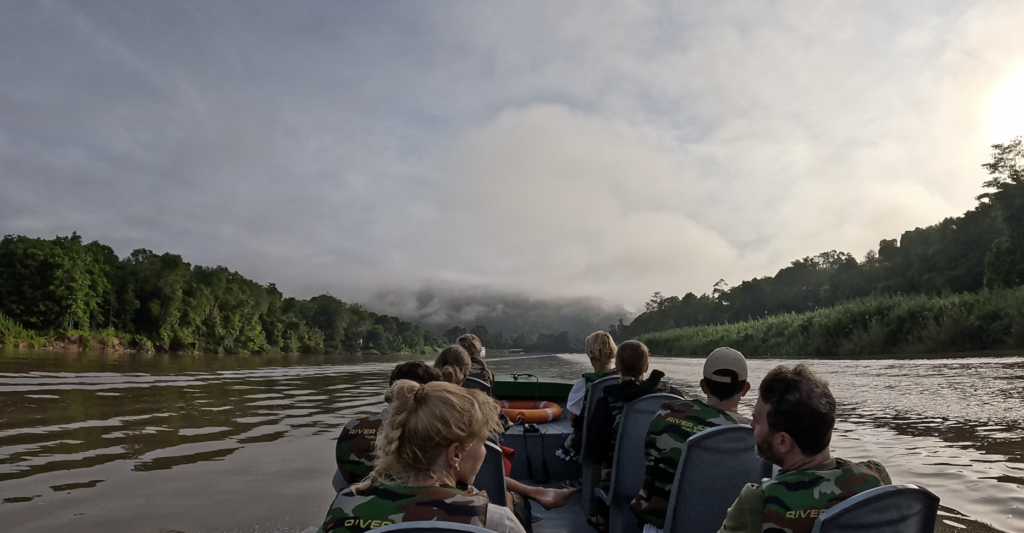
Borneo sits almost directly on the equator, which means one important thing: it’s always warm. There’s very little temperature variation throughout the year, and the idea of a true “dry season” is… optimistic.
Most locals and river safari operators loosely break the year into:
- Drier months: roughly March–October
- Wetter months: roughly November–February
But here’s the part that trips people up: “dry season” does not mean rain-free, and “wet season” doesn’t mean nonstop storms. What matters most for a jungle river safari isn’t temperature—it’s river levels.
River height affects how easily boats can navigate, how close wildlife stays to the riverbanks, and how long daily cruises can run. That’s why timing matters more here than it does for a lot of other wildlife destinations.
Be sure to bookmark my FULL Borneo safari packing list for your trip!
Best time of year for a Borneo safari overall
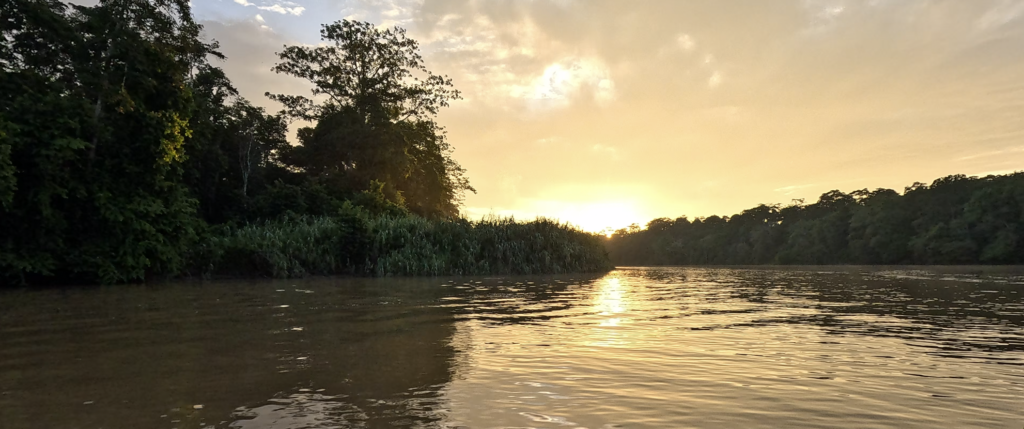
If you’re looking for the best time of year for a river safari in Borneo overall, most operators will point you toward late spring through early fall—especially May through September.
These months usually offer more stable river levels, better wildlife visibility along the banks, fewer full-day rain events, and humidity that’s… manageable, by jungle standards.
This isn’t because conditions are perfect (they never are in a rainforest!), but because things are balanced. You’re not sacrificing wildlife for comfort or comfort for access, which is exactly what most people want from a river safari.
Wondering where to stay? Get the full details on the exact safari I went on (price, logistics, number of daily cruises, where I stayed, etc) in this blog about the all-inclusive package I chose in Borneo! I can’t recommend it enough!
Best time of year for wildlife sightings
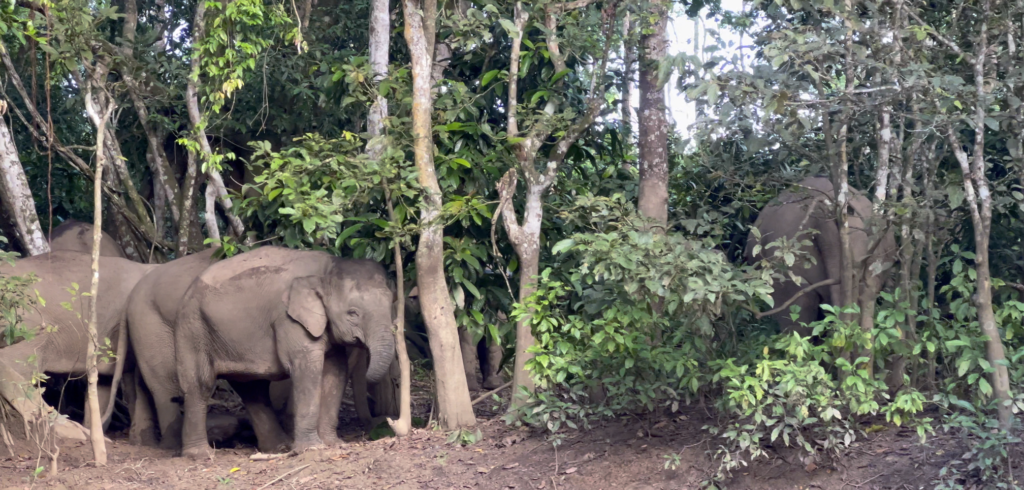
The best time of year for wildlife sightings in Borneo is when river levels are moderate—not super high and not scraping the bottom. When trees are fruiting it’s also a great time to see orangutans active in the trees. Fortunately, most the animals live here year around instead of migrating away, so it’s really down to the conditions.
When rivers flood heavily, animals can spread deeper into the forest. When water levels are moderate, wildlife tends to concentrate near the river edges, which means boats can get closer to feeding areas and crossing points.
This is when sightings are more consistent for orangutans lingering in riverside trees, proboscis monkeys traveling in loud, ridiculous groups, pygmy elephants coming down to drink, and birds like hornbills and kingfishers hanging out along exposed branches.
There are no guarantees with wildlife, so how likely are you to actually see the Borneo “Big 5”? Check out my next blog, What wildlife can you see on a river safari in Borneo, Malaysia?
Best time of year to go to Borneo to see orangutans
If you’re specifically looking for orangutans (and let’s be honest, EVERYONE who goes to Borneo is going hoping to see them) you have a chance any time of year. But, that chance is better during the dry season from April-September, and even better when the trees are fruiting in May-June specifically. Learn more about Bornean orangutans here!
Like most primates, orangutans tend to take shelter from the rain, so they’re harder to find. But anything can happen—I went in September and only saw them once- on a rainy day on the LAST cruise of my trip! That’s wildlife watching, baby!
Best time of year for weather and comfort
If the jungle stresses you out a little (valid), this part matters.
Borneo is always warm, but humidity and mosquitoes aren’t as constant as people assume. I visited in September, and I was genuinely surprised by how comfortable it felt. It wasn’t oppressively humid, and—plot twist—it wasn’t very mosquito-y either.
Did it rain? Of course. The jungle absolutely dumped rain every now and then. But it came in short, dramatic bursts instead of all-day misery, and most river safaris still ran as planned. Honestly, watching rain hammer the river while wildlife just carried on like nothing was happening kind of added to the experience.
In general, mornings and late afternoons are the most comfortable, rain often cools things down rather than ruining the day, and boats usually still operate unless river conditions are unsafe.
Visiting during the rainy season—is it still worth it?
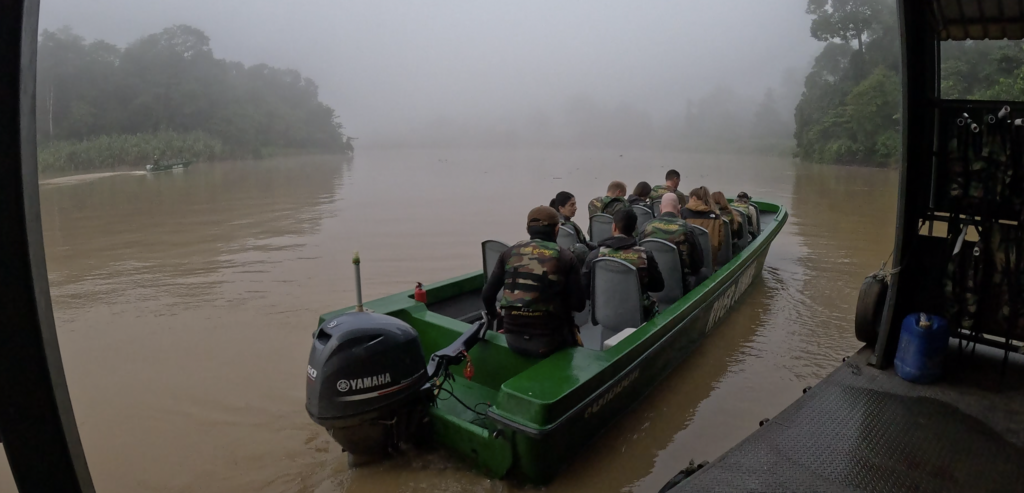
Short answer: yes, if you have the right expectations. Long answer: bring head to toe rain gear.
The rainy season (roughly November–February) comes with trade-offs, but it’s far from a hard no. Rain is a way of life in the rainforest in Borneo, and as long as you have a poncho and can enjoy cozy tea on a covered deck over the river in time between rainy cruises, it’s a great low crowd time to go! You’ll also find better lodge availability and sometimes better pricing.
Obviously the cons include heavier downpours and occasional cruise cancellations if river levels spike.
But if you’re flexible, wildlife-focused, and not expecting luxury safari vibes, the rainy season can still be incredibly rewarding. If you need predictability and sunshine to enjoy yourself, it may feel more stressful than magical.
Check out my full review of whether a river safari in Borneo is actually worth it for my super detailed, honest take!
Month-by-month breakdown (quick and honest)
January–March
Peak rainy season when the rivers can be high and unpredictable. Wildlife is still present, but sightings can be more spread out. If you’re going to spend the money to get out there, this may not be the best time to visit unless you don’t have any other options.
April–June
A transition period when rain starts easing (it never fully stops in the rainforest!), river levels stabilize, and wildlife sightings improve. A really solid option without peak crowds and fruiting trees draw orangutans up into the trees.
July–September
The sweet spot, and when I went! I saw all of the Borneo big 5 (repeatedly!) and the weather was totally manageable with a raincoat for sudden downpours.
October–December
Conditions begin shifting wetter again. Still doable—especially early October—but rainfall becomes less predictable toward the end of the year.
When not to go (if you’re flexible)
If you have total flexibility and want the smoothest possible experience, you might want to avoid peak monsoon periods if heavy rain stresses you out, major regional holidays when lodges fill quickly, and times when river levels are unusually high due to recent storms.
That said, “not ideal” doesn’t mean “not worth it.” Plenty of travelers have incredible trips outside the so-called best months.
How to choose the best time for you
At the end of the day, the best time of year for a river safari in Borneo depends on what’s most important to you.
Wildlife-first travelers should aim for moderate river months in late spring through early fall. Photographers benefit from lower water levels and better riverbank visibility. Budget travelers often find better value during rainy or shoulder seasons. Comfort-focused travelers usually prefer drier months with more predictable cruise schedules.
This is embarassing, but...
Remember the little email newsletter I mentioned earlier? I really, really want to send it to you. You deserve all the things, including fun stories, adventures of your own, tips on sick travel destinations, and a giggle or two. We could all use that.

pretty please with sugar on top
FREE Month-by-Month Guide to the Best Wildlife Experiences on Earth
Stop guessing when it comes to wildlife! Find out exactly when & where to go for the best wildlife encounters on Earth — month by month. Because timing is the difference between “we missed it” and “holy sh*t, I can’t believe I just saw that!


